
Best Time to Visit Leh Ladakh in 2026: Seasons, Weather and Travel Tips
The best time to visit Leh Ladakh is generally from May to September, when daytime temperatures are comparatively comfortable, hotels and camps are operating, and most major sightseeing routes are accessible. June to September is especially suitable for first-time visitors, families, bikers and travellers planning to see Nubra Valley, Pangong Lake and the high mountain passes.
However, the perfect month depends on the experience you want. Visit between December and February for deep winter scenery, travel in June or September for a road trip, or choose July and August when tourism services are at their busiest.
At Content Holidays, we recommend choosing your travel dates according to road access, personal cold tolerance, altitude experience and preferred activities—not simply according to the warmest temperature.
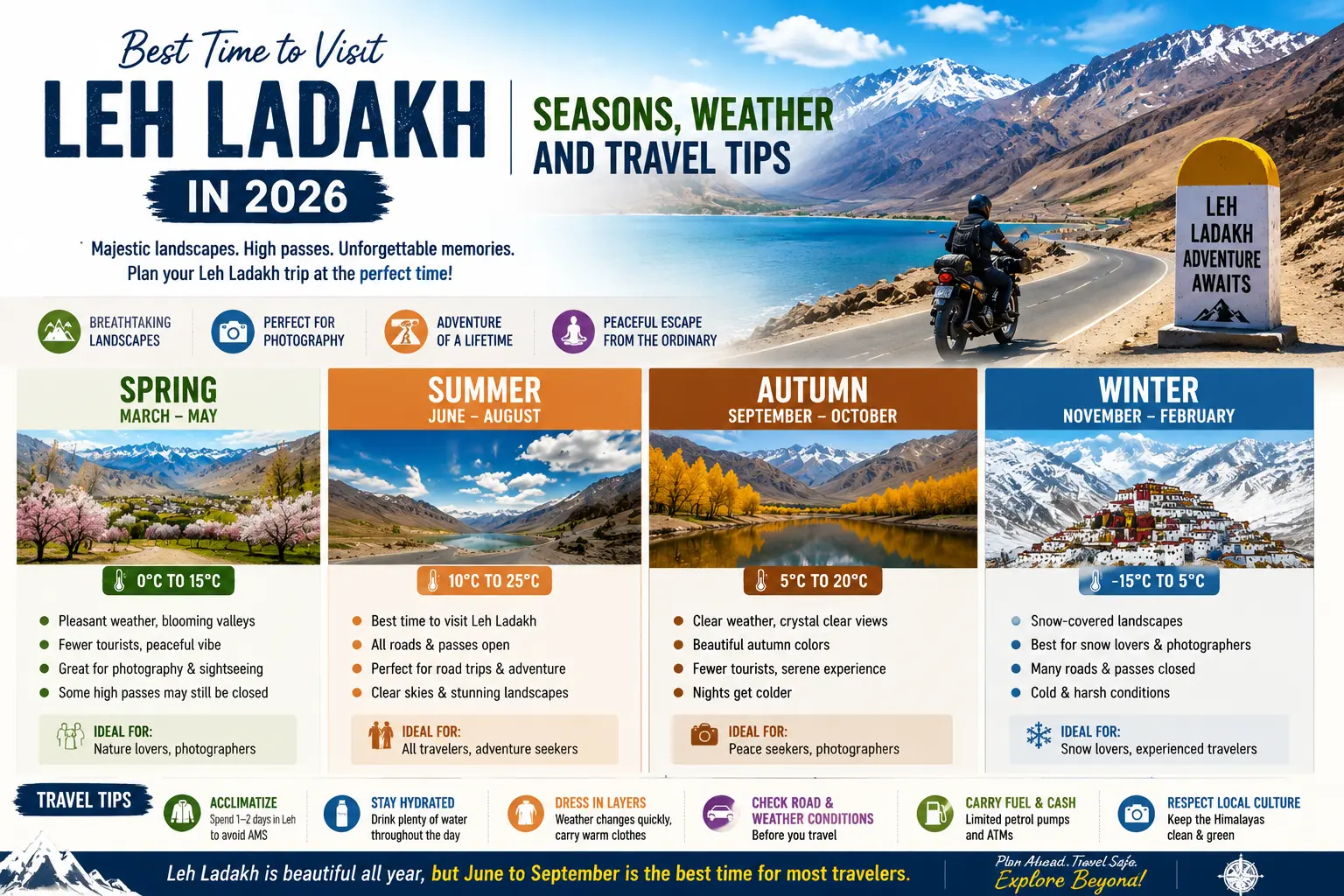
What Is the Best Time to Visit Leh Ladakh?
For most travellers, June to September is the best time to visit Leh Ladakh.
During this period:
- The weather is relatively mild during the day.
- Most hotels, camps, restaurants and transport services are available.
- Roads to popular attractions are more likely to be operational.
- Trekking, cycling, sightseeing and photography are easier.
- Nubra Valley, Pangong Lake, monasteries and other major sites can usually be included in one itinerary.
May can be beautiful but less predictable for road travellers. October is peaceful but colder, with a greater possibility of seasonal services closing. Winter is rewarding for experienced travellers but requires flexibility and proper cold-weather preparation.
Ladakh Tourism also advises visitors arriving in Leh to complete at least 48 hours of acclimatisation before travelling to higher-altitude locations such as Khardung La and Pangong Lake.
Leh Ladakh Weather and Season Overview
The following ranges are broad planning estimates for Leh town. Conditions at Pangong Lake, Tso Moriri and high passes can be much colder and more changeable.
Period | Typical conditions | Best for | Important consideration |
April | Cold mornings, improving daytime weather | Apricot blossoms, quiet sightseeing | Highways may not be fully open |
May | Cool to pleasant days, cold nights | Early summer trips, snow on passes | Road openings can vary |
June | Pleasant days, chilly nights | Road trips, bikers, first-time visitors | Busy season begins |
July–August | Warmest daytime period | Families, trekking, complete itineraries | More tourists and higher demand |
September | Clearer skies, cooler nights | Photography, couples, quieter trips | Excellent overall balance |
October | Cold, calm and less crowded | Slow travel, experienced visitors | Camps and seasonal hotels may close |
November–March | Very cold, snow and frozen landscapes | Winter photography, specialised trips | Limited services and possible disruptions |
Ladakh lies in the rain shadow of the Himalayas and has a generally dry climate. Nevertheless, localised rainfall can still cause flash floods, landslides and road disruption. Official advisories should therefore be checked even during the usual summer travel season.
Book Ladakh Tour Packages: https://contentholidays.com/category/leh-ladakh-tour-packages/
Summer in Leh Ladakh: May to June
May and June mark the transition into the main travel season.
Visiting in May
May is ideal for travellers who want cool weather, fewer visitors and snow remaining around mountain passes. Leh town is active, and many hotels and travel services begin operating for the season.
However, travellers arriving by road should remain flexible. The Srinagar–Leh and Manali–Leh routes open only after snow clearance and safety assessments, and their exact opening dates change each year.
May is better suited to travellers flying into Leh than to those building a fixed, non-refundable road itinerary.
Visiting in June
June is one of the strongest choices for a complete Ladakh holiday. The weather becomes more comfortable, daylight hours are long, and road access generally improves.
It is particularly suitable for:
- First-time Ladakh visitors
- Bike and SUV road trips
- Couples and groups of friends
- Trekking and outdoor activities
- Trips covering Leh, Nubra Valley and Pangong Lake
June can still feel cold after sunset. A sunny afternoon in Leh does not mean a warm evening at Pangong Lake or a comfortable ride over a high pass.
Peak Season in Leh Ladakh: July and August
July and August are among the warmest and busiest months in Ladakh. Leh may experience pleasant daytime conditions, while nights remain cool and high-altitude locations can feel cold at any time.
These months are good for travellers who want:
- Maximum tourism services
- A broad choice of hotels and camps
- Trekking, rafting and adventure activities
- Easier access to popular sightseeing circuits
- A lively atmosphere in Leh
The District Leh tourism website identifies May to September as an ideal trekking period, although winter trekking is possible with specialised preparation.
The disadvantage is demand. Flights, popular hotels, private vehicles and Pangong or Nubra stays can sell quickly. Families travelling during school holidays should reserve essential arrangements well in advance.
Although Ladakh itself is relatively dry, the approach roads through Himachal Pradesh and Kashmir may be affected by monsoon-related landslides or water crossings. Road journeys should include a contingency day.
Autumn in Leh Ladakh: September to October
Why September May Be the Best Overall Month
September offers one of the best combinations of scenery, road accessibility, manageable visitor numbers and cooler weather.
It is especially attractive for:
- Landscape photography
- Honeymoon trips
- Travellers who prefer fewer crowds
- Road journeys with clearer views
- Visitors who find peak-season activity overwhelming
Daytime sightseeing can remain comfortable, but mornings and evenings become noticeably colder. Travellers should carry thermals, gloves and a windproof outer layer.
Visiting in October
October reveals a quieter and more dramatic side of Ladakh. Autumn colours appear around villages, skies can be beautifully clear, and major attractions feel less crowded.
However, October is not the safest choice for a tightly scheduled first visit. Temperatures fall quickly, seasonal camps may close, and snowfall can interrupt high-pass travel.
Choose October when you are comfortable with cold weather and can accept itinerary changes.
Winter in Leh Ladakh: November to March
Winter Ladakh is peaceful, stark and emotionally powerful. Snow can cover Leh and the surrounding mountains, lakes may freeze, and the number of tourists falls sharply.
The experience also comes with practical limits:
- Many seasonal properties and restaurants close.
- Road access from Manali or Srinagar is usually unavailable.
- Flights may be affected by poor weather.
- Mountain passes can close temporarily after snowfall.
- Heating, water and transport arrangements require more planning.
Winter travel is best for experienced visitors, photographers and travellers booking a carefully planned package with dependable local support.
Specialist winter activities should never be treated as ordinary sightseeing. Conditions on frozen rivers, isolated routes and snowbound passes can change quickly, and qualified local guidance is essential.
Best Time to Visit Leh Ladakh for Snowfall
The best time to visit Leh Ladakh for snowfall is generally from December to February.
January is normally the coldest period and offers the strongest chance of seeing a deeply wintry landscape. February can also provide snow while offering slightly longer days.
Travellers who want snow without the harshest winter conditions may consider late November, March or early April, but snowfall is never guaranteed on specific travel dates.
For a comfortable trip with visible snow on high passes rather than constant winter conditions in Leh, May and early June can be better alternatives. You may enjoy snow walls or snow-covered slopes near higher passes while staying in relatively manageable temperatures.
Best Time to Visit Leh Ladakh by Bike
The best time to visit Leh Ladakh by bike is usually from June to September.
June offers dramatic snow-lined roads but may still include water crossings, unstable surfaces or recently cleared sections. July and August provide wider seasonal access, although monsoon conditions outside Ladakh can affect approach highways. September often gives riders clearer skies, lighter traffic and drier-looking landscapes.
A bike trip should include:
- At least one buffer day
- Warm waterproof riding layers
- Gloves suitable for high passes
- Basic puncture and repair supplies
- Fuel planning for remote stretches
- A conservative daily riding distance
- Confirmation of current road conditions
Ladakh Police describes the Manali–Leh and Srinagar–Leh highways as scenic but challenging, with risks including rough sections, snow blockages and landslides.
A powerful motorcycle does not remove the effects of altitude. Riders still need to acclimatise before crossing high passes.
Best Time to Visit Leh Ladakh by Road
For road travel, the most dependable planning window is generally June to September.
Srinagar to Leh Route
The Srinagar–Leh journey passes through Sonamarg, Zoji La, Drass, Kargil and Lamayuru. It is often preferred for a gradual journey towards Leh and can be combined naturally with a Kashmir holiday.
Manali to Leh Route
The Manali–Leh route includes long stretches of dramatic high-altitude terrain. It normally becomes practical later than the Srinagar route because several high passes require extensive snow clearance.
Opening and closing dates are never fixed far in advance. Do not publish or promise a precise annual opening date unless it has been confirmed by current official road advisories.
Best Time to Visit Leh Ladakh with Family
The best time to visit Leh Ladakh with family is from June to September, with June and September offering a particularly good balance of comfort and accessibility.
July and August work well for families tied to school holidays, but advance reservations are important.
Families should plan:
- Two easy days in Leh before higher-altitude excursions
- Shorter road journeys where possible
- Warm clothing for every traveller
- Flexible meal and rest stops
- Immediate medical advice when symptoms worsen
- A spare day before the return flight
Parents travelling with young children, senior citizens or anyone with heart, lung or other significant health concerns should discuss high-altitude travel with a qualified medical professional before booking.
Best Time to Visit Kashmir and Leh Ladakh
The best time to visit Kashmir and Leh Ladakh together is from June to September.
This period allows travellers to enjoy Srinagar, Gulmarg, Pahalgam or Sonamarg before continuing towards Kargil and Leh. June is excellent for green valleys and snow remaining at higher elevations. September is attractive for clearer skies, cooler temperatures and fewer peak-season crowds.
A practical combined route is:
Srinagar → Sonamarg → Kargil → Leh → Nubra Valley → Pangong Lake → Leh
Allow at least 10–12 days for a comfortable combined holiday. Rushing both regions into one week leaves little space for acclimatisation, road delays or meaningful sightseeing.
Content Holidays can customise Kashmir and Ladakh itineraries according to your travel month, arrival city, group type and hotel preference.
How Many Days Do You Need in Leh Ladakh?
A first-time traveller should plan seven to nine days, including acclimatisation.
A balanced itinerary could include:
- Days 1–2: Arrival and acclimatisation in Leh
- Day 3: Leh and nearby monasteries
- Days 4–5: Nubra Valley
- Day 6: Pangong Lake
- Day 7: Return to Leh
- Day 8: Buffer day or local sightseeing
- Day 9: Departure
Add more time for Tso Moriri, Hanle, Zanskar or a Kashmir–Ladakh combination.
Essential Leh Ladakh Travel Tips for 2026
Respect the 48-Hour Acclimatisation Rule
Do not travel directly from Leh airport to Pangong Lake, Nubra Valley or another high-altitude destination. Official guidance requires at least 48 hours of acclimatisation after arriving in Leh.
Pack for Several Seasons
Carry:
- Thermal base layers
- Fleece or insulated mid-layer
- Windproof jacket
- Warm cap and gloves
- UV-protective sunglasses
- High-protection sunscreen
- Comfortable walking shoes
- Reusable water bottle
Do Not Ignore Altitude Symptoms
Headache, nausea, unusual fatigue, poor coordination and breathlessness can be warning signs. Rest, avoid further ascent and seek professional medical help when symptoms are severe or worsening.
Keep the Itinerary Flexible
Weather, road clearance, landslides and local restrictions can change travel plans. A buffer day is valuable, especially for road trips and winter holidays.
Confirm Permits and Access
Permit requirements can differ by nationality and destination. International travellers should verify the latest rules for restricted or protected areas through official Ladakh Tourism channels or a registered local operator.
Plan Your Leh Ladakh Holiday with Content Holidays
The ideal Ladakh holiday is not simply the one with the best weather. It is the one that matches your comfort level, travel style, available days and preferred experiences.
Content Holidays can help you plan:
- Family-friendly Leh Ladakh packages
- Private road trips
- Kashmir and Ladakh combination tours
- Couple and honeymoon itineraries
- Bike-trip support
- Customised stays in Leh, Nubra and Pangong
- Seasonal itineraries with acclimatisation time
Explore our complete Leh Ladakh travel guide or contact Content Holidays for a personalised itinerary based on your dates and departure city.
Frequently Asked Questions
What is the best month to visit Leh Ladakh?
June and September are two of the best months for most travellers. June provides improving road access and long daylight hours, while September usually offers cooler weather, fewer visitors and excellent photography conditions.
Is July a good time to visit Leh Ladakh?
Yes. July is suitable for sightseeing, trekking, family travel and visiting Nubra Valley or Pangong Lake. It is also a busy month, so flights, hotels and vehicles should be reserved early.
When is the best time to visit Leh Ladakh for snowfall?
December to February offers the best chance of seeing winter snow in and around Leh. January is usually the coldest month. Travellers wanting snow on mountain passes with milder conditions can consider May or early June.
Which month is best for a Leh Ladakh bike trip?
June to September is the preferred riding period. September is often attractive because of lighter tourist traffic and clearer autumn views, while June provides dramatic snow-lined high passes.
Can families visit Leh Ladakh in May?
Families can visit in May, especially when flying to Leh, but the weather remains cold and road access can be uncertain. June to September is generally more convenient for a first family holiday.
Is Leh Ladakh open throughout the year?
Leh can be reached by air during winter, subject to flight operations and weather. However, highway access, mountain passes, camps and remote-area services may be limited or temporarily unavailable.
Final Recommendation
For a first visit, the best time to visit Leh Ladakh is from June to September. Choose June for an early-season road adventure, July or August for the widest range of tourist services, and September for fewer crowds and beautiful clear landscapes.
Choose December to February only when snowfall and winter scenery are your main priorities and you are prepared for severe cold, reduced services and possible disruptions.
The right month makes a major difference, but thoughtful acclimatisation, flexible planning and reliable local arrangements are just as important as the season.
Book Ladakh Tour Packages:
Anzer Ahmad is a Kashmir-based travel expert and founder of Content Holidays, specializing in customized Kashmir and Leh Ladakh tour packages. With years of on-ground experience helping thousands of travelers explore the valleys of Gulmarg, Pahalgam, and Dal Lake, Ahmad brings firsthand knowledge and trusted guidance to every journey