
Spiti Valley to Leh Road Trip: Route Map, Distance and Best Time
A Spiti Valley to Leh road trip connects two of the Indian Himalayas’ most powerful landscapes. The journey moves from Spiti’s ancient monasteries and remote villages to Ladakh’s vast plateaus, high mountain passes and dramatic desert valleys.
The practical route begins in Kaza and travels through Losar, Kunzum Pass, Gramphu, Lahaul, Jispa and Sarchu before joining the Manali–Leh Highway towards Leh. Depending on overnight stops and route variations, the Kaza-to-Leh journey is approximately 600–650 kilometres and should normally be divided across three or four driving days.
For a complete journey beginning in Chandigarh or Shimla, covering Kinnaur and Spiti before reaching Leh, travellers should allow around 12–14 days. The best season is usually from late June to mid-September, but mountain-road access changes annually according to snowfall, clearance work and weather.
At Content Holidays, we recommend treating this as an expedition-style holiday rather than a simple transfer between two destinations.
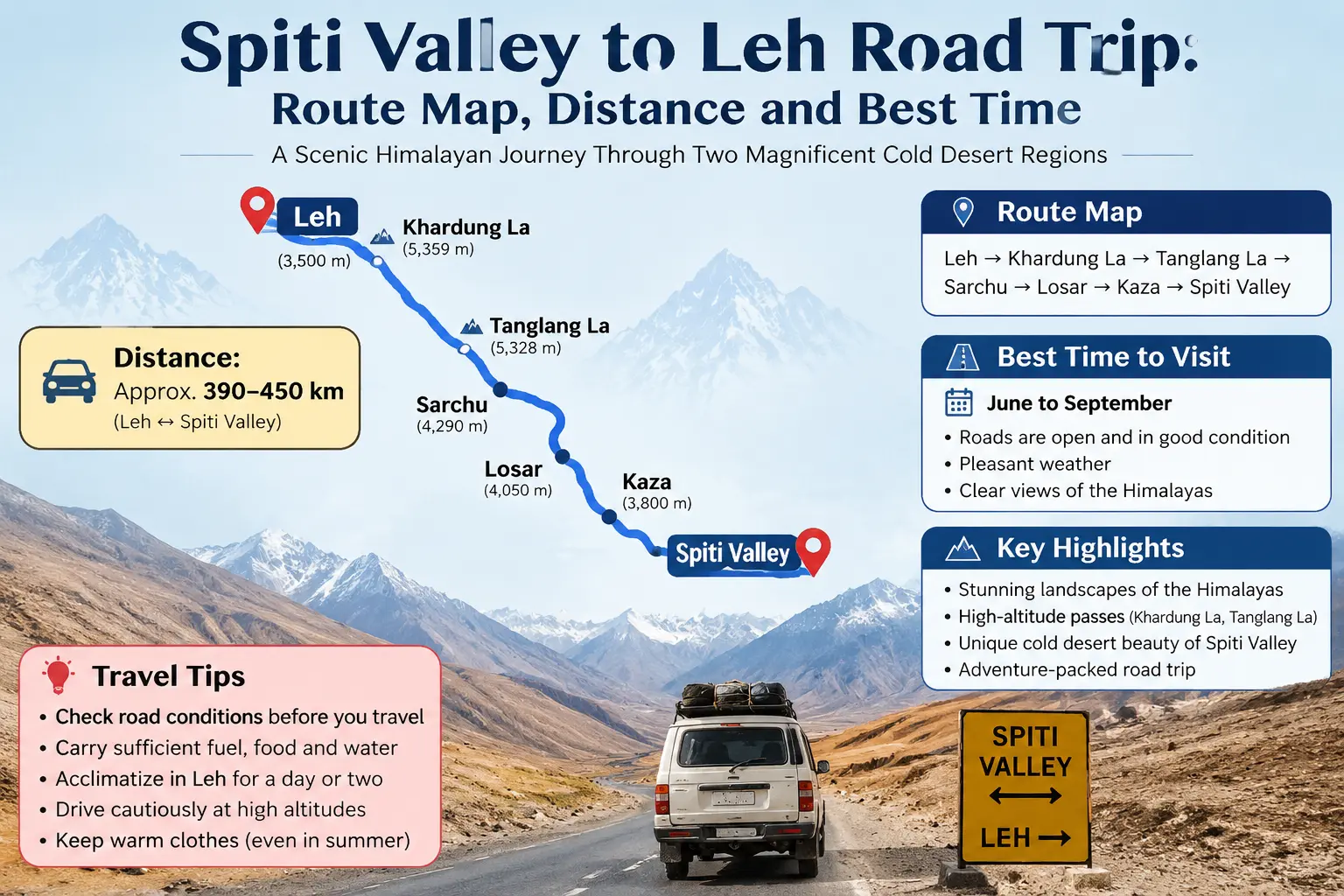
Spiti Valley to Leh Road Trip at a Glance
Trip detail | Practical recommendation |
Main starting point in Spiti | Kaza |
Destination | Leh, Ladakh |
Approximate Kaza-to-Leh distance | 600–650 km, depending on route and overnight stops |
Suggested driving time | 3–4 days from Kaza |
Complete tour duration | 12–14 days from Chandigarh or Shimla |
Best travel window | Late June to mid-September |
Preferred vehicle | High-clearance SUV or properly prepared motorcycle |
Major overnight stops | Keylong/Jispa and Sarchu |
Main challenges | High altitude, rough roads, water crossings and limited services |
Suitable for | Adventure travellers, photographers, couples and small groups |
The route is not suitable for hurried travel. Even when two places appear close on a map, road speed can be low because of broken surfaces, stream crossings, mountain passes and weather-related delays.
Spiti Valley to Leh Route Map
Main Route from Kaza to Leh
The most practical route is:
Kaza → Losar → Kunzum Pass → Batal → Gramphu → Atal Tunnel area → Tandi → Keylong/Jispa → Darcha → Sarchu → Pang → Upshi → Leh
A simple route map can be divided into three stages:
- Kaza to Jispa: Cross from Spiti into Lahaul through Kunzum Pass and continue towards Keylong or Jispa.
- Jispa to Sarchu: Travel through Darcha and cross the high-altitude section near Baralacha La.
- Sarchu to Leh: Continue through the Gata Loops, Nakee La, Lachulung La, Pang, More Plains and Tanglang La.
The route combines parts of National Highway 505 with the Manali–Leh corridor. Ladakh Police describes the Manali–Leh road as scenic but challenging because of rough stretches, high passes, landslide risks and possible snow blockages.
Extended Route from Shimla through Spiti
Travellers who want to experience the complete Himalayan circuit can follow:
Chandigarh → Shimla → Narkanda → Sarahan → Sangla → Kalpa → Nako → Tabo → Dhankar → Kaza → Jispa → Sarchu → Leh
This route allows the landscape and altitude to change gradually. It also includes the cultural highlights of Kinnaur and Spiti before the journey enters Ladakh.
A gradual itinerary is generally more enjoyable than flying into a high-altitude destination and immediately attempting long road journeys.
Spiti Valley to Leh Distance
The Spiti Valley to Leh distance depends on where the measurement begins.
Route | Approximate distance | Suggested travel time |
Kaza to Jispa | 190–220 km | 8–10 hours |
Jispa to Sarchu | 80–90 km | 4–6 hours |
Sarchu to Leh | 250–270 km | 9–11 hours |
Kaza to Leh | About 600–650 km | 3–4 days |
Shimla to Leh via Kinnaur and Spiti | More than 1,000 km | 10–14 days with sightseeing |
These figures are planning estimates rather than fixed navigation promises. Detours, bridge work, traffic controls and the selected hotel can change the total.
The Leh to Spiti Valley distance is broadly the same when travelling in reverse, but journey time may differ according to road conditions and where travellers stop overnight.
Do not attempt Kaza to Leh in one continuous drive. The distance, road surface and sustained altitude make that approach tiring and unnecessarily risky.
Best Time for a Spiti Valley-to-Leh Road Trip
The best time for the combined route is generally late June to mid-September.
Both Kunzum Pass and the Manali–Leh Highway need to be operational. Winter snow can keep these roads closed for several months, and reopening dates vary each year.
Late June
Late June offers fresh mountain scenery, remaining snow near the passes and long daylight hours. It can also bring:
- Recently cleared roads
- Muddy or broken sections
- Cold mornings
- Strong water crossings as snow melts
- Uncertain opening dates after a heavy winter
Choose late June only with flexible bookings and verified road updates.
July and August
July and August are the most popular months for the journey. Tourism services are widely available, and the route is usually active.
However, monsoon conditions in lower Himachal Pradesh can create landslides, slippery roads and rockfall. Himachal Tourism specifically advises extra driving caution during July and August because of slippery conditions and landslide or rockfall risks.
Ladakh and Spiti are comparatively dry, but the approach corridors and connecting roads can still be disrupted.
September
September is often the strongest overall choice. Skies can be clearer, water crossings may become more manageable, and peak-season traffic begins to reduce.
Nights become colder, particularly at Jispa, Sarchu and other high-altitude stops. Travellers should complete the route before the possibility of early autumn snowfall increases.
October to May
This period is not recommended for the complete road connection. Kunzum Pass and parts of the Manali–Leh route normally become inaccessible during winter. Ladakh’s government has also noted that the Srinagar–Leh and Manali–Leh highways remain closed during the winter period.
Suggested 12-Day Spiti Valley to Leh Itinerary
Day 1: Chandigarh to Shimla
Arrive in Chandigarh and drive to Shimla. Keep the first day relaxed after a flight or long train journey.
Day 2: Shimla to Sarahan
Travel through mountain towns and forested roads towards Sarahan. Visit Bhimakali Temple when time permits.
Day 3: Sarahan to Sangla
Enter Kinnaur and continue towards Sangla Valley. Enjoy a quiet evening beside the Baspa River.
Day 4: Sangla, Chitkul and Kalpa
Visit Chitkul and Rakcham before continuing to Kalpa. Keep extra time for road delays.
Day 5: Kalpa to Nako
Drive deeper into the trans-Himalayan region. Stop at viewpoints and continue to the high-altitude village of Nako.
Day 6: Nako to Tabo
Travel through the Sumdo area towards Tabo. Visit Tabo Monastery and spend the night in the village.
Day 7: Tabo to Kaza
Visit Dhankar or Pin Valley when road conditions and time allow. Continue to Kaza for a two-night stay.
Day 8: Kaza Local Sightseeing
Explore Key Monastery and villages such as Kibber, Chicham, Langza, Hikkim or Komic. The precise combination should depend on road conditions and traveller comfort.
Day 9: Kaza to Jispa
Leave early and cross Losar, Kunzum Pass, Batal and Gramphu. Continue through Lahaul towards Jispa.
This is one of the journey’s longest and roughest days. A high-clearance vehicle and an experienced mountain driver are strongly recommended.
Day 10: Jispa to Sarchu
Travel through Darcha and the Baralacha La region. Keep the day relatively short because Sarchu is at a demanding altitude.
Travellers who feel unwell should not continue climbing simply to protect a hotel booking.
Day 11: Sarchu to Leh
Cross the Gata Loops, Nakee La, Lachulung La, Pang, More Plains and Tanglang La before descending towards Upshi and Leh.
Day 12: Rest and Local Leh Sightseeing
Use this day to rest, explore Leh Market, visit Shanti Stupa or see nearby attractions. Travellers continuing to Nubra Valley or Pangong Lake should add at least three to five more days.
Important Mountain Passes on the Route
Kunzum Pass
Kunzum Pass connects Spiti with Lahaul and is one of the key seasonal gates on the journey. Road availability depends heavily on snow clearance and weather.
Baralacha La
Baralacha La is a major high pass between the Jispa and Sarchu sections. Temperatures can change rapidly even in summer.
Nakee La and Lachulung La
These passes appear between Sarchu and Pang. The landscape becomes increasingly open, barren and otherworldly.
Tanglang La
Tanglang La is one of the final major high-altitude crossings before the descent towards Upshi and Leh.
Travellers should avoid spending unnecessary time at high passes. Photograph the landscape, but return to the vehicle when headaches, dizziness, nausea or breathlessness appear.
Can You Travel from Leh to Spiti Valley?
Yes, the Leh to Spiti Valley journey follows the same corridor in reverse:
Leh → Sarchu → Jispa → Gramphu → Kunzum Pass → Losar → Kaza
The reverse direction can work well for travellers who are already acclimatised in Leh. However, spending a first night at Sarchu after descending from Leh may still be uncomfortable because Sarchu remains extremely high.
A safer reverse itinerary is:
- Day 1: Leh to Jispa
- Day 2: Jispa to Kaza
- Day 3 onward: Explore Spiti before exiting through Kinnaur and Shimla
The Leh Ladakh to Spiti Valley road should only be attempted while both connecting corridors are officially open.
Best Vehicle for the Journey
A high-clearance SUV is the most practical choice for families, international visitors and travellers unfamiliar with Himalayan roads.
Suitable options generally include:
- Private SUV with an experienced driver
- Properly maintained four-wheel-drive vehicle
- Adventure motorcycle prepared for rough terrain
- Organised small-group road-trip vehicle
Low-clearance cars are vulnerable on broken roads and stream crossings. Self-driving travellers should be comfortable with steep drops, loose stones, water crossings and long distances without mechanical assistance.
Motorcyclists need waterproof luggage, puncture tools, spare components, warm riding gear and conservative daily targets.
Fuel, Food, Hotels and Mobile Network
Fuel
Refuel whenever a dependable station is available. Tandi is traditionally an important fuel point for travellers moving between Spiti, Lahaul and the Manali–Leh route.
Carry reserve fuel only in approved containers and according to applicable transport and safety rules.
Accommodation
Accommodation is available in Kaza, Keylong, Jispa, Sarchu and Leh, but facilities vary.
Sarchu mainly offers seasonal camps. Nights can be extremely cold, and comfort levels may not match city hotels. Travellers wanting a gentler journey can consider staying lower where the itinerary allows.
Food and Water
Roadside dhabas operate seasonally. Carry drinking water, dry snacks and basic food for delays, but avoid excessive single-use plastic.
Mobile Connectivity
Network availability is inconsistent between settlements. Download maps and booking details before leaving Kaza or Leh. Families should share their route and expected arrival times with someone at home.
Altitude and Health Planning
This journey spends several days above 3,000 metres and crosses passes considerably higher than that. Altitude must be taken seriously even by fit travellers.
Ladakh Tourism requires tourists arriving in Leh to take at least 48 hours of complete rest before moving to higher-altitude areas. Although travellers entering overland have ascended more gradually, they must still monitor symptoms and avoid aggressive itineraries.
Practical precautions include:
- Increase altitude gradually.
- Drink water regularly without forcing excessive intake.
- Avoid alcohol during the highest parts of the journey.
- Eat light, familiar meals.
- Do not hide symptoms from the driver or tour leader.
- Descend and seek medical help when symptoms become severe or worsen.
Travellers with heart, lung or other significant medical conditions should consult a qualified doctor before booking.
Permits and Documents
Indian travellers should carry valid government-issued photo identification.
Foreign nationals should carry:
- Passport
- Valid Indian visa
- Passport-size photographs
- Multiple photocopies of travel documents
- Any Protected Area Permit required for the planned itinerary
Permit rules depend on nationality and the places included after arriving in Ladakh. Areas such as Nubra Valley, Pangong Lake and certain border regions may have additional requirements.
Confirm the current rules through official tourism channels or a registered local operator before departure. Do not rely on an old travel blog or screenshot.
Mistakes to Avoid
Planning Around Exact Road-Opening Dates
Seasonal roads do not open on the same date every year. Snowfall, avalanches, repairs and administrative inspections affect access.
Driving from Kaza to Leh in One Day
The route is too demanding for a sensible one-day transfer. Divide it into safe stages.
Skipping Buffer Days
Keep at least one contingency day before a return flight or fixed international connection.
Choosing Sarchu Without Considering Altitude
Sarchu is scenic but physically demanding. Travellers with poor acclimatisation may need an alternative overnight plan.
Carrying Summer Clothes Only
Sunshine can feel warm at midday while nights and mountain passes remain freezing. Pack thermal layers, a windproof jacket, gloves, a warm cap and UV-protective eyewear.
Ignoring Driver Experience
Mountain-road skill matters more than luxury vehicle features. Use a driver who understands the Kaza, Kunzum and Manali–Leh sectors.
Plan Your Spiti Valley to Leh Trip with Content Holidays
Content Holidays can design a customised Spiti and Ladakh journey around your travel dates, comfort level, group size and preferred experiences.
Our trip-planning support can include:
- Private cab or SUV arrangements
- Hotels in Kinnaur, Spiti, Lahaul and Ladakh
- Seasonal route planning
- Airport pickup and drop
- Breakfast and dinner plans
- Permit guidance
- Buffer-day recommendations
- Leh, Nubra Valley and Pangong extensions
- Support for couples, families, groups and international visitors
A complete package can begin in Chandigarh, Shimla, Manali or Leh and end at the location that best fits your onward travel.
Explore our Leh Ladakh tour packages or ask Content Holidays to create a private Spiti Valley to Leh road-trip plan.
Frequently Asked Questions
What is the distance from Spiti Valley to Leh?
The road distance from Kaza in Spiti Valley to Leh is approximately 600–650 kilometres, depending on the selected route, accommodation and temporary diversions. The journey should usually be divided into three or four days.
What is the Leh to Spiti Valley distance?
The Leh-to-Kaza distance is broadly similar at around 600–650 kilometres. Travellers normally stay at Jispa or another suitable stop before crossing towards Kunzum Pass and Kaza.
What is the best time to travel from Spiti Valley to Leh?
Late June to mid-September is generally the best period because both Kunzum Pass and the Manali–Leh road need to be open. September often offers a good balance of clearer weather and lower traffic.
Can I travel directly from Kaza to Leh in one day?
It is technically possible only under extreme driving conditions, but it is not a safe or enjoyable plan. The route is long, rough and located at sustained high altitude. Use Jispa and Sarchu or another suitable combination of overnight stops.
How many days are required for a Spiti and Leh road trip?
Allow 12–14 days for a complete Chandigarh–Kinnaur–Spiti–Leh journey. Add three to five days when including Nubra Valley, Pangong Lake or other Ladakh attractions.
Is the Spiti-to-Leh road trip suitable for families?
It can suit healthy families with older children when the itinerary is slow, accommodation is selected carefully and an experienced driver is used. It may not suit very young children, travellers with serious health conditions or anyone unable to tolerate long mountain drives.
Explore Ladakh Tour Package:
Anzer Ahmad is a Kashmir-based travel expert and founder of Content Holidays, specializing in customized Kashmir and Leh Ladakh tour packages. With years of on-ground experience helping thousands of travelers explore the valleys of Gulmarg, Pahalgam, and Dal Lake, Ahmad brings firsthand knowledge and trusted guidance to every journey