
Trekking in Leh Ladakh 2026: Best Treks, Packages & Difficulty Levels
Last updated: October 2026
Trekking in Leh Ladakh is best from June to September, when most summer trails are open and conditions are relatively stable. Beginners can start with the Sham Valley Trek, fit first-timers can choose Markha Valley, and well-acclimatised trekkers can attempt Stok Kangri, Rumtse to Tso Moriri or the longer Zanskar routes.
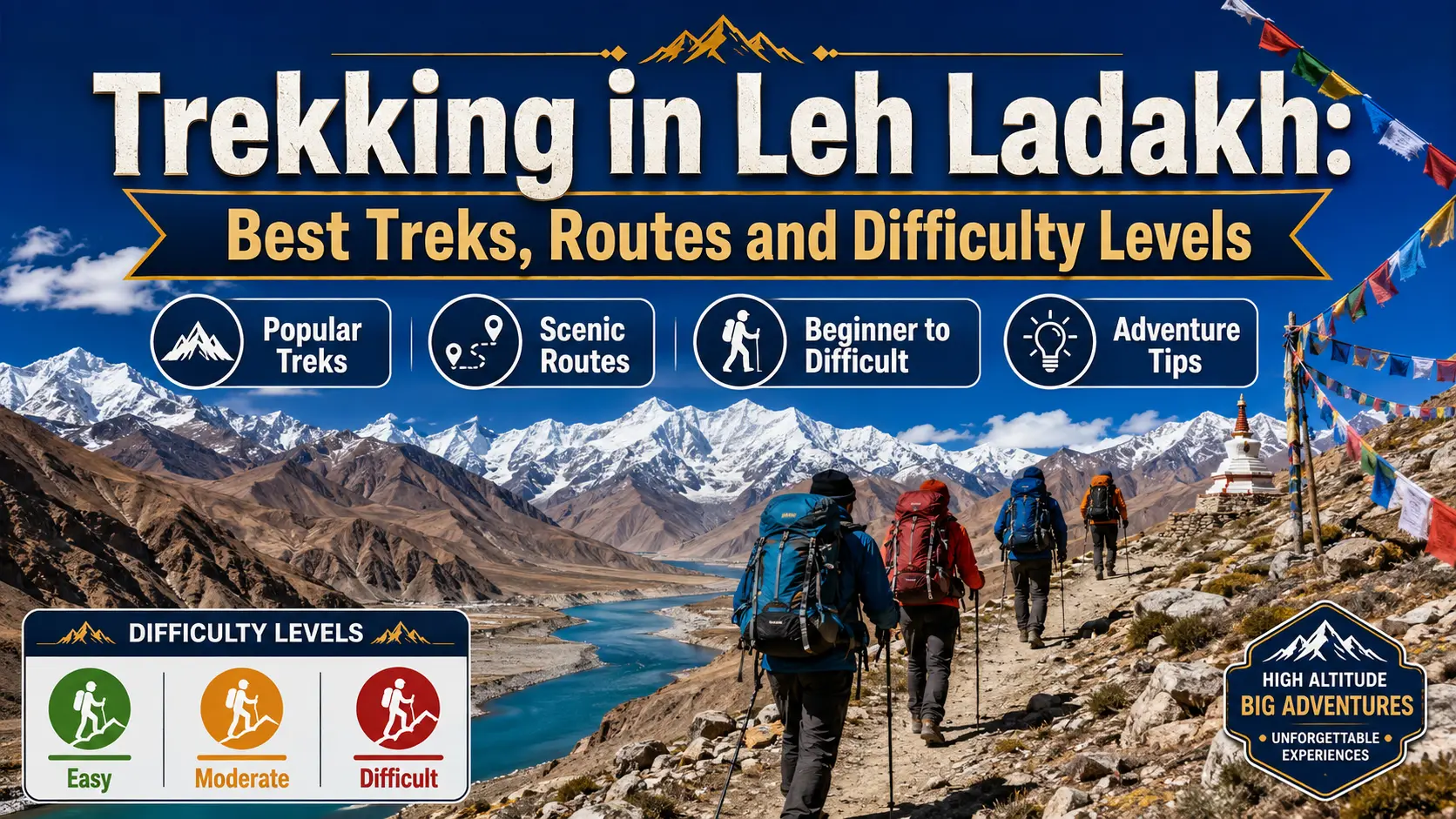
Popular Ladakh Treks: Pick Yours
Tell us your dates and experience and we will send a quote. Every trek can be customised for weather, health and group size.
Sham Valley Trek
2–4 days · Easy to moderate
Village homestays, monasteries and gentle passes close to Leh.
Enquire on WhatsAppMarkha Valley Trek
5–8 days · Moderate to challenging
High-desert scenery, river crossings, villages and a high pass.
Enquire on WhatsAppStok Kangri Trek
About 9 days · Difficult
A 6,153 m trekking peak that needs no technical climbing but serious fitness and acclimatisation.
Enquire on WhatsAppRumtse to Tso Moriri
7–10 days · Challenging
Changthang plateau, high passes and the high-altitude Tso Moriri lake.
Enquire on WhatsAppSnow Leopard Trek
5–10 days · Moderate walking, severe cold
Tracking around Rumbak and Hemis National Park with local trackers.
Enquire on WhatsAppChadar Trek
About 6–9 days · Difficult
Frozen Zanskar River trek, only when authorised for the season.
Enquire on WhatsAppLeh Ladakh Trekking at a Glance
Durations and difficulty vary by trail, campsite, weather and operator. Use this as a planning guide.
| Trek | Duration | Difficulty | Best period | Best for |
|---|---|---|---|---|
| Sham Valley | 2–4 days | Easy to moderate | May–Sept | Beginners, families with older teens |
| Spituk–Rumbak–Stok | 3–4 days | Moderate | June–Sept | Short-trip trekkers |
| Markha Valley | 5–8 days | Moderate to challenging | June–Sept | Fit first-time high-altitude trekkers |
| Lamayuru to Chilling | 4–6 days | Moderate to challenging | June–Sept | Culture and landscape seekers |
| Stok Kangri | About 9 days | Difficult | July–Sept | Experienced, acclimatised trekkers |
| Rumtse to Tso Moriri | 7–10 days | Challenging | July–Sept | Experienced trekkers |
| Lamayuru–Padum | 9–12 days | Challenging | July–Sept | Remote-route enthusiasts |
| Lamayuru–Padum–Darcha | 18–21 days | Expedition level | July–Sept | Highly experienced trekkers |
| Snow leopard trek | 5–10 days | Moderate walking, severe cold | Winter | Wildlife travellers |
| Chadar Trek | About 6–9 days | Difficult, condition-dependent | Jan–Feb, when authorised | Experienced winter trekkers |
Official Ladakh Tourism highlights Sham Valley, Markha Valley, Rumtse–Tso Moriri and Chadar among the region's signature treks. District Leh guidance names May to September as the main season and recommends experienced guides and suitable camping equipment.
Best Time for Trekking in Ladakh
| Period | What to expect |
|---|---|
| May – June | Lower, shorter routes near Leh. Snow can remain on higher passes. Check stream levels locally. |
| July – August | Main season. High passes more accessible, homestays and camps running, longer routes practical. Ladakh is a rain-shadow region, but storms, flash floods and rockfall still happen. |
| September | Clear views, fewer visitors, colder nights at high camps. Carry a warmer sleeping system. |
| October – April | Summer routes become impractical. Only specialist winter trips such as snow leopard tracking and Chadar, with specialist planning. |
Easy Treks in Leh Ladakh
Sham Valley Trek
The usual first trek in Ladakh. Routes connect villages such as Likir, Yangthang, Hemis Shukpachan and Temisgam, with shorter walking days, homestays and relatively moderate passes. "Easy" is relative at this altitude, so spend at least two full days in Leh before starting.
Short Village and Monastery Walks
Guided day walks around Leh suit families, older travellers with medical approval, first-timers and anyone testing their altitude response.
Moderate Treks in Ladakh
Markha Valley Trek
One of the best-known treks in Ladakh, passing settlements such as Skiu, Markha, Hankar and Nimaling and crossing a high pass of roughly 5,200 m. It suits people who exercise regularly, can walk five to seven hours on consecutive days, and have acclimatised properly. A longer itinerary with gradual ascent is safer than a compressed one.
Spituk–Rumbak–Stok
A shorter route southwest of Leh through Rumbak, useful if you cannot commit to a week. Expect uneven terrain and a high crossing.
Lamayuru to Chilling
Eroded landscapes, monasteries and remote settlements, with fewer visitors than the classic routes.
Challenging High-Altitude Treks
Stok Kangri Trek (6,153 m)
Stok Kangri is the best-known trekking peak near Leh. It needs no technical climbing, but the summit day is long and the altitude is serious. Itineraries usually start from Stok village, go via Mankarmo to base camp at about 5,000 m, and use a pre-dawn summit push. Plan at least two days in Leh first and ideally some earlier high-altitude trekking experience. Summit day can take 12–16 hours, so go with a qualified guide and a team that carries a first-aid kit and oxygen.
Rumtse to Tso Moriri
Crosses Changthang towards Tso Moriri, with sustained time at high elevation and limited shelter. Not a first trek right after arriving in Leh. Respect grazing land, wildlife habitat and Changpa communities.
Zanskar Routes
Lamayuru–Padum (about 9–12 days) and Lamayuru–Padum–Darcha (18–21 days) need experienced support, careful food planning and emergency arrangements. Road building has changed some traditional trail lines, so verify itineraries locally rather than copying an old map.
Snow Leopard Trekking in Ladakh
This is a winter wildlife-tracking trip rather than a point-to-point trek. Groups base in villages around Rumbak and Hemis National Park, walk with local trackers and wait patiently in severe cold.
- Sightings are never guaranteed.
- Wildlife must never be chased or approached.
- Trackers' instructions take priority.
- Winter nights can be extremely cold.
Avoid any operator that guarantees a sighting.
Chadar Trek: Check Before You Book
Book Chadar only when the route has official approval, the operator follows current procedures, medical screening and evacuation plans are clear, winter equipment is included and the plan has acclimatisation days in Leh.
How to Choose the Right Ladakh Trek
- Experience: Sham Valley for a first multiday trek, Markha after regular hiking, Stok Kangri and Rumtse–Tso Moriri only for experienced trekkers.
- Altitude: A 10 km day at height can feel harder than a much longer walk at sea level.
- Time: Add acclimatisation days first. A six-day trek can need nine or ten days in total.
- Experience you want: villages (Sham), classic all-round (Markha), summit (Stok Kangri), high lakes (Tso Moriri), remoteness (Zanskar), wildlife (snow leopard).
Acclimatisation and Altitude Safety
Ladakh Tourism advises allowing at least 48 hours in Leh before moving higher or starting strenuous activity. During those first two days rest, walk gently, eat light, avoid alcohol and tell your guide about any headache, nausea or unusual fatigue.
Worsening headache, loss of coordination, confusion, severe breathlessness or symptoms at rest need urgent medical assessment and usually descent. Ask your own doctor whether any altitude medication is suitable for you. Do not start medicine on advice from a website.
Fitness and Training Plan
Start six to eight weeks before departure (earlier for Stok Kangri):
- Brisk walking or jogging three to four times a week
- Longer weekend hikes with a loaded daypack
- Stair or incline training
- Squats, lunges, calf raises and core work
- Rest days
Fitness improves comfort but does not prevent altitude sickness. Highly fit people also get unwell at height.
What to Pack for Trekking in Ladakh
- Broken-in waterproof trekking boots and trekking poles
- Base layers, fleece or light down jacket, waterproof and windproof shell
- Warm cap, gloves, sun hat, UV sunglasses, high-SPF sunscreen
- Headlamp with spare batteries, power bank, refillable bottles
- Personal first-aid kit, ID and permit documents
Sleeping bag rating depends on route, month and campsite altitude, so ask the operator for expected overnight temperatures.
What a Good Ladakh Trekking Package Includes
- Airport or hotel transfers and acclimatisation stay in Leh
- Trekking guide and local support staff
- Homestays or tents, meals on the trek, camping and kitchen equipment
- Local fees and permits, first-aid and emergency equipment
- Route briefing and waste-management arrangements
Confirm what is excluded: personal insurance, rescue costs, equipment rental, tips, drinks and weather-delay expenses.
Questions to Ask Before Booking a Trek Operator
- Is the guide trained in wilderness first aid?
- How many trekkers per guide?
- What is the acclimatisation schedule?
- Is oxygen carried and does the team know when to use it?
- What is the evacuation procedure?
- What happens if weather changes the route?
Avoid operators that guarantee wildlife sightings, dismiss altitude concerns or sell very compressed itineraries.
Responsible Trekking in Ladakh
- Carry all non-biodegradable waste back and use refillable bottles.
- Stay on established routes and do not disturb wildlife.
- Ask permission before photographing people.
- Use toilets away from water sources.
- Support locally owned homestays and services.
Combine Your Trek With a Ladakh Tour Package
Add Nubra Valley and Pangong Lake before or after your trek.
Ladakh 8 Days / 7 Nights
Leh · Nubra · Turtuk · Pangong · Tso Moriri
Ladakh 9 Days / 8 Nights
Leh · Nubra · Turtuk · Pangong · Tso Moriri
What Travellers Say About Content Holidays
4.9 ★★★★★ on Google from 225 reviews.
"Content holidays, our experience was 10/10. Well managed, superb hotel rooms and transit to various places was smooth. We went in a vacation to Kashmir and Leh ladhak with content holidays, and will recommend all to avail their service to experience what actually a luxurious trip means in less expenses."
"I recently completed a 5 nights and 6 days Leh–Ladakh tour with Content Holidays, and the entire trip was an amazing experience. The tour was excellently coordinated by Muskan, who ensured everything was smooth and hassle-free throughout …"
"Had an amazing Kashmir trip with Content Holiday in June. They managed our hotels, houseboat, and transportation perfectly. Everything was well organized, the driver was professional and punctual, and the entire trip was smooth and hassle-free."
Read all 225 reviews on Google
Plan Your Ladakh Trek With Content Holidays
We design treks around your fitness, dates, stay preference and mountain experience, from beginner Sham Valley itineraries to Markha, Stok Kangri, Rumtse–Tso Moriri, Zanskar routes and winter snow leopard trips, with acclimatisation hotels, local guides and post-trek visits to Nubra or Pangong. Every route stays adjustable for weather, health and trail conditions.
WhatsApp Us for a QuoteFrequently Asked Questions
Which is the best trek in Leh Ladakh for beginners?
The Sham Valley Trek is the most suitable beginner option, with shorter stages, village homestays and relatively accessible routes. Beginners still need at least 48 hours of acclimatisation in Leh.
Is the Markha Valley Trek difficult?
It is usually rated moderate to challenging. The distance is manageable, but the altitude and a high pass raise the real difficulty. Regular fitness, proper acclimatisation and a gradual itinerary make it a realistic first big trek for fit people.
What is the best time for trekking in Leh Ladakh?
June to September is the main season. July and August are the most reliable for high passes, September is quieter with colder nights, and May works for short routes near Leh. Winter is only for specialist trips like snow leopard tracking and Chadar.
How many days should I allow for a Ladakh trekking trip?
Add at least two acclimatisation days in Leh to the trek itself. A 5–6 day trek usually means a trip of 8–10 days in total, and a Stok Kangri plan needs about 11–12 days.
Is a guide necessary for trekking in Ladakh?
For most treks, yes. Trails are remote, weather changes fast and help can be far away. A trained guide handles route finding, pacing, altitude symptoms and emergencies, and some routes need registered operators.
When is snow leopard trekking possible in Ladakh?
Snow leopard tracking is a winter activity, usually December to March, around valleys and villages near Hemis National Park and Rumbak. Sightings are never guaranteed, and nights are extremely cold.
Is the Stok Kangri trek suitable for beginners?
Not for first-time trekkers. It needs no technical climbing, but the summit is 6,153 m, summit day is very long and acclimatisation is critical. Do an easier high-altitude trek first.
Explore Ladakh tour packages: 6 Days 5 Nights · 8 Days 7 Nights · 9 Days 8 Nights
Anzer Ahmad is a Kashmir-based travel expert and founder of Content Holidays, specializing in customized Kashmir and Leh Ladakh tour packages. With years of on-ground experience helping thousands of travelers explore the valleys of Gulmarg, Pahalgam, and Dal Lake, Ahmad brings firsthand knowledge and trusted guidance to every journey