
Turtuk Travel Guide 2026 – India's Last Village: Balti Culture, How to Reach & Travel Tips
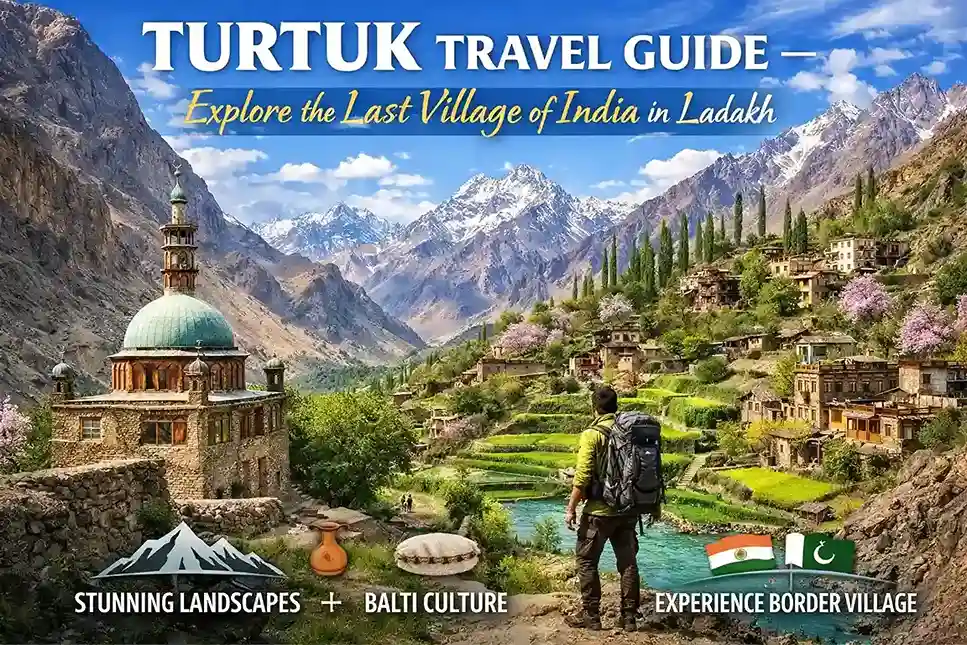
Welcome to the most complete Turtuk travel guide for 2026. Nestled in the Nubra Valley of Ladakh at an altitude of 3,001 metres (9,846 feet) on the banks of the Shyok River — approximately 205 km from Leh — Turtuk holds a unique distinction: it is India’s northernmost tourist-accessible village, sitting just a few kilometres from the Line of Control (LoC) with Pakistan.
What makes Turtuk extraordinary is its story. Until the 1971 Indo-Pakistan War, Turtuk was part of Pakistani-administered Baltistan. When Indian forces captured it on December 8, 1971, the village — along with Chalunka, Tyakshi, and Dhothang — became Indian territory overnight. The Balti people who lived here suddenly found themselves citizens of a different country, with family members separated across the border. That history is visible in every corner of Turtuk today — in its unique Balti architecture, its language (Balti, a form of ancient Tibetan), its mosque and monastery coexisting in harmony, and the extraordinary warmth of its people who carry this complex history with dignity and openness.
Unlike the rest of Ladakh — a dramatic high-altitude desert — Turtuk is lush, green, and fertile. Apricot orchards line every pathway, mulberry trees shade the narrow stone lanes, and the Karakoram peaks form a dramatic backdrop to a village that feels genuinely different from anywhere else in India. Only opened to tourism in 2010, Turtuk retains a quality of genuine discovery that most of Ladakh has already lost.
This Turtuk travel guide covers everything: how to reach from Leh, permits, best time by month, all attractions from Balti Heritage House to Brokpa Fort, the food, homestays, and a practical day itinerary. As a Srinagar-based tour operator, Content Holidays has accompanied guests to Turtuk many times — every detail in this guide comes from firsthand experience.
⛰️ Altitude: 3,001 metres (9,846 ft) — one of Ladakh’s lowest villages · Milder climate
🚗 Distance from Leh: ~205 km via Khardung La + Nubra Valley · 7–9 hours drive
📅 Best Time: May to September · June–July for apricot bloom · September for clear skies
🌡️ Temperature: Summer: 7°C–25°C · Winter: -5°C to -20°C
🎫 Permit: ILP required (Indians) · PAP required (foreigners) · Apply at lahdclehpermit.in
⏱️ Duration: 1 night minimum · 2 nights recommended for full experience
🏡 Culture: Balti Muslim · Language: Balti (ancient Tibetan) · Part of India since 1971
🍑 Famous For: Apricot orchards · Balti Heritage House · Shyok River · 1971 War history
Turtuk History — From Baltistan to India: The 1971 Story
Understanding Turtuk’s history transforms a visit to the village from a sightseeing trip into something far more meaningful. This is one of India’s most extraordinary border stories.
Ancient History — Silk Road and Yagbo Dynasty
The route includes crossing Khardung La Pass, followed by a scenic drive through Nubra Valley. You can also stop at Diskit and Hunder on the way.
The 1971 War — The Night Turtuk Became India
Until December 8, 1971, Turtuk was part of Pakistan-administered Baltistan. During the 1971 Indo-Pakistan War, Indian Army forces captured Turtuk and three neighbouring villages — Chalunka, Tyakshi, and Dhothang — as part of military operations in the northern sector. The villagers woke up as Pakistani citizens and went to sleep as Indian citizens. Many families found themselves separated — relatives on the Pakistan side of the new border, unable to communicate. Phone calls to Baltistan were impossible. Letters took years or never arrived. Some families were reunited only decades later. The village’s current royal family — the Yabgo family, descendants of the Yagbo dynasty — found themselves in particularly complex circumstances, with family members on both sides of the new border. Visitors to Turtuk can meet current members of this family who speak openly about this extraordinary chapter of their history. Their accounts, delivered with remarkable equanimity and warmth, are among the most powerful human stories you will encounter anywhere in India.
Opened to Tourism — 2010
Due to its sensitive location near the Line of Control, Turtuk remained completely closed to tourists until 2010. It was only opened when the Indian government determined it was safe to allow civilian access under military supervision. Even today, photography of military installations is strictly prohibited and a permit is required to visit.
Where is Turtuk Located
Turtuk is located in the Nubra Valley of Ladakh, near the India-Pakistan border. It lies along the banks of the Shyok River and is about 205 km from Leh.
At an altitude of 3,001 meters, Turtuk is one of the lowest-altitude villages in Ladakh, making it relatively more comfortable for travelers.
How to Reach Turtuk from Leh — Complete Route Guide
Turtuk is approximately 205 km from Leh and takes 7–9 hours by road. The journey is an adventure in itself — crossing Khardung La, descending through Nubra Valley, and finally reaching the lush green landscapes of Turtuk that feel completely different from everything you passed through.
The Route: Leh → Khardung La → Nubra → Turtuk
- Leh (0 km): Depart by 6–7 AM. Full fuel tank — next petrol at Khalsar (90 km) or Diskit.
- Khardung La Pass (39 km, 5,359m): 15-minute stop. Tea + photos. Limit time at altitude. Begin descent to Nubra.
- Diskit (120 km): Option to visit Diskit Monastery. Fuel and food stop.
- Hunder (127 km): Sand dunes + Bactrian camels. Quick stop on the way if not staying.
- Khalsar (90 km from Leh): Petrol pump. The road from here to Turtuk runs along the Shyok River — increasingly scenic and increasingly remote.
- Turtuk (205 km): Arrive afternoon. The road narrows significantly in the final 30 km — high clearance vehicle recommended.
Travel Options from Leh
| Mode | Duration | Cost | Notes |
|---|---|---|---|
| Private taxi (4×4 / SUV) | 7–9 hrs | ₹8,000–₩12,000 return | ✅ Recommended. High clearance preferred for last 30 km. |
| Bike (Royal Enfield) | 7–8 hrs | ₹900–₹1,500/day rental | Popular with bikers. Full riding gear essential. |
| Shared taxi (Leh→Diskit + Diskit→Turtuk) | 9–12 hrs | ₹600–₩1,000/person | Requires 2 taxis. Limited frequency Diskit to Turtuk. |
Road Conditions to Turtuk
The road from Leh to Diskit (via Khardung La) is largely paved and manageable. From Diskit to Turtuk, the road follows the Shyok River and becomes narrower and rougher in sections — particularly the last 30 km before Turtuk. A high-clearance vehicle (SUV, 4×4, or Royal Enfield) is strongly recommended. Sedan cars can technically make it but will struggle on rough patches. The road is open from approximately May to November and may close in heavy winter snow.
Turtuk Permit 2026 — Complete Guide
A permit is mandatory for all tourists visiting Turtuk — both Indian and foreign nationals. Turtuk is a restricted area due to its proximity to the Line of Control (LoC) with Pakistan. Without a valid permit, army checkpoints will deny entry.
For Indian Tourists — Inner Line Permit (ILP)
- How to get: Apply online at lahdclehpermit.in — instant approval, QR code on phone accepted at all checkpoints. Or visit DC Office, Leh (Main Market, 9 AM–3 PM).
- Fee: ₹400 per person (Environment Development Fee) + ₹100 Red Cross Fund.
- Validity: Up to 7 days, covers Nubra Valley and Turtuk.
- Document needed: Aadhaar card, Voter ID, Passport, or any government photo ID.
For Foreign Tourists — Protected Area Permit (PAP)
- Apply at DC Office, Leh or through a registered travel agent.
- Must travel in groups of minimum 2 persons.
- Passport + valid Indian visa required.
- Nationals of Afghanistan, Bangladesh, China, Myanmar, Pakistan, and Sri Lanka have additional restrictions.
Turtuk Altitude & Weather
Temperature Guide
- Summer: 5°C to 20°C
- Winter: -6°C to -20°C
- Nights: Cold throughout the year
Best Season to Visit
- Summer (May–June): Best time with pleasant weather
- Monsoon (July–September): Green landscapes and fewer crowds
- Winter (October–March): Snow-covered beauty but extreme cold
Best Time to Visit Turtuk — Month by Month Guide
Turtuk’s lower altitude (3,001m) gives it a more moderate climate than the rest of Ladakh. However, access via Khardung La is still seasonal — and the apricot harvest makes certain months particularly special.
| Month | Temperature | Road Status | Experience |
|---|---|---|---|
| April | 0°C – 15°C | Opening (late Apr) | Apricot blossoms — the most beautiful time. Snow patches, few crowds. Roads may be rough. |
| May–June | 7°C – 22°C | Open ✅ | ✅ Lush green orchards, flowering meadows. Pleasant temperatures. Not yet peak crowded. |
| July–Aug | 10°C – 25°C | Open ✅ Peak season | Apricot harvest (July). Most activities. Most crowded. Book well ahead. |
| September | 7°C – 20°C | Open ✅ Best month | Best overall. Clear skies, fewer tourists, golden autumn colours, walnuts ripe for purchase. |
| October | 0°C – 15°C | Check daily — closing | Autumn colours on poplar and willow trees. Shoulder season. Khardung La may close. |
| Nov–Mar | -5°C – -20°C | Difficult/closed | Road may be inaccessible. Very cold. Few facilities open. Not recommended for most visitors. |
Recommendation: Visit in July for the apricot harvest or September for the best overall experience — fewer crowds, clearest skies, walnuts in season, golden autumn foliage.
Top Places to Visit in Turtuk — Complete Attractions Guide
1. Balti Heritage House & Museum
The Balti Heritage House in the upper hamlet of Farol is Turtuk’s most important cultural attraction — the ancestral home of Ghulam Haider Ashoorpa (a member of the royal Yabgo dynasty), restored and reimagined as a living museum. Inside you will find: original Balti artefacts dating back 400 years, traditional attire and household items, historic photographs from before and after 1971, ancient manuscripts, and tools from daily Balti life. The heir of the family often gives personal tours — hearing the 1971 story directly from a family member who lived through the border change is an experience that no guidebook can adequately prepare you for. This is not a polished tourist attraction — it is a genuine family home with a genuine story. Entry: small donation appreciated. Timings: flexible — ask at your homestay.
2. Brokpa Fort
The Brokpa Fort stands on a scenic hilltop on the banks of the Shyok River — ancient ruins that give insight into the Yabgo dynasty’s rule over the region. Dating back thousands of years to when the Brokpas (a nomadic clan of Ladakh) inhabited this region, the fort’s ruins command panoramic views of the Shyok Valley and surrounding Karakoram peaks. A short walk up to the fort is rewarding both historically and photographically. The views from the fort walls — across the river, the orchards, and the mountains — are among the best in Turtuk.
3. Turtuk Mosque (Jamia Masjid)
The Turtuk Mosque (Jamia Masjid) is one of the oldest mosques in Ladakh, dating back to medieval times and renovated multiple times over the centuries. The mosque contains extraordinarily intricate carved wooden pillars and ceilings — a style unique to Balti architecture, combining Islamic geometric patterns with traditional Ladakhi woodworking. The craftsmanship is exceptional and unlike anything in the rest of Ladakh. Visitors are welcome outside prayer times — remove shoes and dress modestly.
4. Buddhist Monastery (Turtuk Gompa)
Located at the far end of the village, the 11th-century Turtuk Gompa sits against a backdrop of rust-coloured snow-capped mountains. What makes this monastery unique is its coexistence in a predominantly Muslim village — a symbol of the cultural complexity and harmony that defines Turtuk. Built before the region converted to Islam, the monastery is maintained by the community and offers panoramic views of the entire valley. The walk to the monastery passes through Turtuk’s green fields — beautiful in summer.
5. Historic Polo Ground
A 16th-century polo ground in Turtuk is still in use by the village’s younger generation for friendly polo matches. Polo has deep roots in Baltistan — it was the Balti royal pastime and Turtuk’s ground is one of the oldest in the region. If your visit coincides with a match, you may be invited to watch or even join. One of those only-in-Turtuk moments that makes the long drive feel completely worthwhile.
6. Shyok River Walk
The Shyok River — sometimes called the “River of Death” due to its unpredictable and powerful currents — runs along the edge of Turtuk village, its turquoise water a striking contrast to the brown mountains and green orchards. Walking along the riverbank is one of Turtuk’s most serene experiences. The wooden bridge across the Shyok, with lofty Karakoram peaks behind, is one of the most photographed spots in the village.
7. Apricot Orchards — Apricot Capital of Ladakh
Turtuk is the highest apricot-producing village in Ladakh — and the quality of its apricots is legendary among local food enthusiasts. The orchards line every pathway through the village, and in July during the harvest season, you can pick and eat apricots directly from the trees. The village produces organic apricot products that make for exceptional souvenirs: apricot jam, apricot oil (used for cooking and skin care), and dried apricots. Buying directly from village families ensures the income stays local.
8. Natural Cold Storage
One of Turtuk’s most fascinating traditional engineering marvels — a system of underground glacial stone chambers used as natural refrigerators throughout the year. An underground glacial watercourse keeps these chambers at near-freezing temperatures even in summer, allowing villagers to preserve perishables without electricity. This ingenious system has been in use for centuries and is still actively used by local families. Ask your homestay host to show you one — few tourists know this exists.
9. Turtuk Waterfall
A popular short trek from the main village leads to the Turtuk Waterfall — a refreshing cascade framed by the dramatic Karakoram range. The trek is 1–1.5 hours each way on a clear mountain trail. The waterfall is fed by glacial melt and is at its most powerful in June–July. The surrounding landscape — green valley floor, rocky peaks, cascading water — makes this a photographer’s delight.
10. Thang Village — Last Indian Hamlet
Thang Village (approximately 15 km beyond Turtuk toward the LoC) is India’s last hamlet before the Pakistan border — even more remote than Turtuk. With special permission, some tourists visit Thang for a view of Pakistani Baltistan across the valley. Note: Permission requirements change — confirm current accessibility with the army base in Turtuk before planning a Thang visit.
Top Things to Do in Turtuk
Village Heritage Walk
Turtuk is divided into three distinct sections — Youl (the oldest area, densely populated with farming land and one of the two village mosques), Farol (home to the Balti Heritage House and upper village), and Pharol (newer residential area). A self-guided walk connecting all three sections takes 2–3 hours and passes through narrow stone lanes, apricot orchards, traditional wooden homes, and the mosque and monastery. This walk — more than any specific attraction — gives you the texture of Turtuk’s daily life.
Balti Cuisine Tasting
Turtuk’s food is unlike anything else in Ladakh — a unique Balti cuisine shaped by Central Asian, Tibetan, and Pakistani influences. Must-try dishes:
- Zan: Roasted barley porridge — the Balti staple. Dense, nutritious, warming.
- Tsamig: Barley flatbread, often eaten with zan.
- Thathuk: Thick noodle soup with vegetables and sometimes meat — Balti comfort food.
- Apricot pancakes: Fresh or dried apricot filling in thin dough — extraordinary when made with village apricots.
- Yak butter tea (Po Cha): Salty, buttery tea — an acquired taste, but deeply warming at altitude.
- Fresh apricots (July harvest): Nothing prepares you for eating a sun-warmed apricot directly from the tree in a Turtuk orchard.
Apricot & Walnut Shopping
Buying organic apricot products directly from Turtuk village families is one of the most satisfying shopping experiences in Ladakh. Apricot jam, apricot oil, dried apricots, and walnuts are all available at village stalls and through your homestay host. Prices are significantly lower than in Leh market and quality is much higher — you are buying directly from the producer. Carry cash — no UPI or card payment in Turtuk.
Turtuk Waterfall Trek
The 1–1.5 hour trek to Turtuk Waterfall is the most popular physical activity in the village. The path is clear and well-used. Start early morning for the best light and to avoid afternoon heat. Carry water — no facilities on the trail.
Cultural Interactions
Simply talking to Turtuk’s residents — particularly the older generation — is one of the most rewarding things you can do here. The Yabgo royal family members speak openly about 1971 and the experience of belonging to two countries. Village elders can describe life before and after the border change. These conversations, conducted through your homestay host or a local guide, are experiences that stay with you for life.
Turtuk Hotels & Homestays — Where to Stay
Accommodation in Turtuk is limited to homestays, small guesthouses, and simple camps. There are no luxury hotels. This is not a weakness — staying with a Balti family in a traditional stone home, eating home-cooked Balti food, and learning about the village from your hosts is the defining Turtuk experience.
Homestays (Recommended)
Turtuk’s homestays are its best accommodation option. Local families open their homes to tourists, providing clean rooms, home-cooked Balti meals, and genuine hospitality that is rare in more touristy parts of Ladakh.
- Maha Guest House: One of Turtuk’s most well-reviewed homestays — clean rooms, excellent Balti food, hosted by a local family. ₹800–₩1,500/night including meals.
- Turtuk Holiday Guest House: Another popular option with comfortable rooms and warm hospitality. ₹600–₩1,200/night.
- Various family homestays: Many village families accept guests. Your tour operator or the Turtuk village head (Nambardar) can recommend options based on availability.
Guesthouses in Diskit or Hunder (if Turtuk is full)
During peak season (July–August), Turtuk’s limited homestays fill up quickly. A good alternative is to stay in Diskit or Hunder (95 km from Turtuk, 3–4 hours) and do Turtuk as a day trip — though this means very long days. Booking Turtuk accommodation 2–3 months ahead for July–August is strongly recommended.
Booking tip: Most Turtuk homestays do not have online booking. The best way to book is through your tour operator (Content Holidays handles Turtuk bookings for all Leh Ladakh packages) or by calling Turtuk village directly via numbers available on the Ladakh tourism board website.
Food & Local Cuisine
Turtuk offers a unique blend of Balti and Ladakhi cuisine:
- Skyu (stew)
- Khambir (bread)
- Apricot-based dishes
- Butter tea
Local cafes serve authentic meals with fresh ingredients.
Turtuk Day Itinerary — How to Spend 1 Day in Turtuk Village
If you have 1 full day in Turtuk (staying the previous night in Turtuk or arriving early from Nubra), here is the ideal plan:
7:00 AM — Early morning Shyok River walk
Walk to the riverbank before the village wakes up. The turquoise water, morning mist, and Karakoram peaks in early light are extraordinary.
8:30 AM — Balti breakfast at homestay
Apricot pancakes, tsamig, Balti chai. The best breakfast in Ladakh.
9:30 AM — Balti Heritage House visit
Visit the Yabgo family’s living museum in Farol. Allow 1–1.5 hours — if the family member is available for a personal tour, take it. Bring a small gift or donation.
11:00 AM — Turtuk Mosque + Buddhist Monastery
Walk through the old village to the mosque (intricate wooden carving). Then continue to the 11th-century Gompa at the far end of the village — pass through green fields and get panoramic valley views.
1:00 PM — Lunch + Apricot orchard visit
Thathuk (Balti noodle soup) for lunch. Walk through the apricot orchards — in July, eat directly from the trees. Buy apricot jam and dried apricots from village stalls.
2:30 PM — Brokpa Fort + Village walk (Youl section)
Walk up to the Brokpa Fort ruins for the best panoramic view of Turtuk. Descend through the Youl section of the village — the oldest part, densely green, with traditional stone homes.
4:30 PM — Polo Ground + Natural Cold Storage
Visit the 16th-century polo ground. Ask your homestay host to show you the natural cold storage chambers — a fascinating traditional engineering system few tourists see.
6:30 PM — Sunset over the Karakoram + Dinner
Walk to the wooden bridge over the Shyok for the best sunset light. Then return to homestay for a Balti dinner and conversation with your hosts.
Turtuk Trip Cost — 2026 Budget Breakdown
| Expense | Cost Range | Notes |
|---|---|---|
| Private taxi Leh–Turtuk–Leh (2 days) | ₹10,000–₹15,000/vehicle | Shared among 2–4 people |
| Homestay (incl. meals) | ₹800–₹1,500/night | Includes breakfast + dinner usually |
| ILP Permit fee | ₹500–₹600/person | Environmental fee + Red Cross |
| Food (extra, snacks, cafes) | ₹300–₩600/day | Village dhabas are very affordable |
| Apricots/walnuts shopping | ₹500–₩2,000 | Best souvenirs — buy direct from farmers |
| Total 2-day Turtuk trip | ₹3,500–₩6,000/person | Group of 4 sharing taxi |
Important: Carry all cash from Leh. No ATMs in Turtuk. No UPI or card payment accepted. Nearest ATM is in Diskit, 95 km away.
Turtuk Travel Tips — Essential Guide
- Get ILP permit before leaving Leh — online at lahdclehpermit.in: Army checkpoints are strict. No permit means no entry. Apply the night before your trip for instant digital approval.
- Carry all cash from Leh: No ATMs in Turtuk. No UPI in most village shops. Carry ₹5,000–8,000 per person in cash for a 2-night stay including shopping.
- Fuel tank full in Diskit: Fill up at Diskit (120 km from Leh). The nearest petrol pump to Turtuk is in Diskit. Running out of fuel on the Diskit–Turtuk road is a serious problem.
- High clearance vehicle for the last 30 km: The road from Diskit to Turtuk is narrow and rough in sections. SUV or high-clearance vehicle strongly recommended. Sedan cars may struggle.
- Acclimatise in Leh first: Although Turtuk is at 3,001m (lower than Leh), the drive over Khardung La (5,359m) is the route. Spend 2 nights in Leh before attempting the crossing.
- Respect local customs — Turtuk is a conservative Muslim village: Dress modestly (no sleeveless, no shorts in the village). Remove shoes before entering mosque. Ask permission before photographing people. Women should carry a scarf for mosque visits.
- No photography of military installations: Turtuk is near the LoC. Strictly no photography of army posts, vehicles, or personnel. Follow all army instructions at checkpoints without question.
- Postpaid SIM only: Prepaid SIMs do not work in Ladakh. Airtel and Jio postpaid work in Diskit and Hunder. Network coverage in Turtuk is unreliable — expect offline for significant portions of the trip.
- Buy apricot products directly from farmers — not from Leh market: Apricots, jams, and walnuts purchased in Turtuk are fresher, higher quality, and cheaper. Income goes directly to the village family.
- Book Turtuk homestay in advance for July–August: Peak season fills the village’s limited accommodation quickly. Book 2–3 months ahead through your tour operator.
Frequently Asked Questions
Q: What is Turtuk famous for?
A (EXPANDED): Turtuk is famous for five things: (1) Being India’s northernmost tourist-accessible village — on the LoC with Pakistan, (2) Balti culture — a unique Muslim-Tibetan heritage found almost nowhere else in India, (3) Its 1971 war history — part of Pakistan until December 8, 1971, (4) Apricot orchards — highest apricot-producing village in Ladakh, (5) The Balti Heritage House — a living museum with 400-year-old artefacts hosted by the royal Yabgo family.
Q: Is Turtuk the last village of India?
A (EXPANDED): Turtuk is India’s northernmost major tourist-accessible village in Ladakh, located near the Line of Control (LoC) with Pakistan. Beyond Turtuk, Thang village is even closer to the LoC but access requires special permission. The village of Turtuk itself was part of Pakistani-administered Baltistan until December 8, 1971, when Indian forces captured it during the Indo-Pakistan War.
Q: When did Turtuk become part of India?
A: Turtuk became part of India on December 8, 1971, during the Indo-Pakistan War (also called the Bangladesh Liberation War). Indian Army forces captured Turtuk and three neighbouring villages (Chalunka, Tyakshi, and Dhothang) as part of military operations in the northern sector. Before this date, Turtuk was part of Pakistani-administered Baltistan (Gilgit-Baltistan region). The Balti people of Turtuk became Indian citizens overnight, with many family members separated across the new border.
Q: Can you see Pakistan from Turtuk?
A: From Turtuk, you can see the high-altitude peaks of Pakistan-administered Baltistan, but not Pakistani villages directly. For a closer view of the Line of Control (LoC), some tourists visit nearby Thang village (15 km beyond Turtuk) with special permission — from Thang, Pakistani territory is clearly visible across the valley. Always confirm current access permissions for Thang with the army base in Turtuk before planning a visit.
Q: Is K2 visible from Turtuk?
A: K2 (8,611m, the world’s second-highest mountain) is located approximately 140 km from Turtuk and is blocked from view by the high peaks of the intervening Karakoram range. K2 is not visible from Turtuk village. However, the surrounding Karakoram peaks visible from Turtuk — particularly in the direction of Pakistan — are dramatic and spectacular. On exceptionally clear September days, some experienced travelers claim to see distant peaks that may be in the K2 massif area, but this cannot be confirmed.
Q: What is the best time to visit Turtuk?
A: May to September is the best time to visit Turtuk. The roads via Khardung La are open and conditions are pleasant. July is the apricot harvest season — you can eat fresh apricots directly from the trees, and the orchards are at their most beautiful. September is the best overall month — clear skies, fewer tourists, walnuts in season, and golden autumn light on the Karakoram peaks. April is spectacular for apricot blossom photography but roads may still be rough from winter.
Q: How far is Turtuk from Leh and how do I reach it?
A: Turtuk is approximately 205 km from Leh by road. The journey takes 7–9 hours via Khardung La Pass (5,359m) through Nubra Valley. Route: Leh → South Pullu → Khardung La → North Pullu → Diskit → Hunder → Turtuk. The road is paved most of the way but the last 30 km to Turtuk has rough sections — high-clearance vehicle recommended. A private SUV taxi from Leh to Turtuk (2-day return trip) costs approximately ₹10,000–₹15,000 per vehicle.
Visit Turtuk with Content Holidays — Leh Ladakh Packages
Turtuk is available as an add-on to all our Leh Ladakh packages. As a Srinagar-based operator, we have accompanied guests to Turtuk many times and know every stop on the Leh–Nubra–Turtuk route personally. We handle your ILP permit, arrange your Turtuk homestay, and plan your visit to the apricot orchards and Balti Heritage House with local knowledge that no Delhi or Mumbai agent can match.
Includes Turtuk
Breathtaking Leh 9 Days 8 Nights
Leh · Khardung La · Nubra · Turtuk · Pangong
₹28,000 /person
View Package →Ultimate
Kashmir + Ladakh 12 Days 11 Nights
Srinagar · Gulmarg · Leh · Nubra · Turtuk · Pangong
₹38,000 /person
View Package →Short Ladakh Trip
Magical Ladakh 6 Days 5 Nights
Leh · Khardung La · Nubra · Pangong Lake
₹18,000 /person
View Package →Custom
Custom Leh + Turtuk Package
Any duration · Turtuk homestay included · ILP handled
From ₹15,000 /person
Get Custom Quote →Plan your Turtuk trip with Content Holidays
+91 7006684126
ILP permits handled · Turtuk homestay bookings · Leh–Nubra–Turtuk full route expertise
Get a Free Quote →Also see: Nubra Valley Travel Guide · Khardung La Travel Guide · All Leh Ladakh Packages
Anzer Ahmad is a Kashmir-based travel expert and founder of Content Holidays, specializing in customized Kashmir and Leh Ladakh tour packages. With years of on-ground experience helping thousands of travelers explore the valleys of Gulmarg, Pahalgam, and Dal Lake, Ahmad brings firsthand knowledge and trusted guidance to every journey